March the month so far!
This month look out for:
- Returning summer visitors (birds)
- Song birds singing
- First woodland flowers
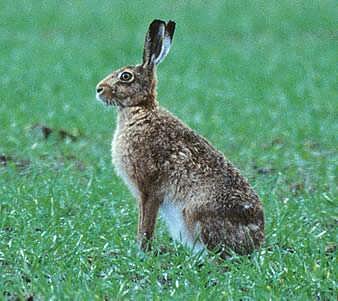
- 'Mad' March hares
- Blackthorn in flower
- Frog and toad spawn in ponds
Although there can be warm days, March can often remain in the grip of the winter weather. However it is impossible not to feel the mounting anticipation of Spring and notice the new emergent life. As the nights get longer, and at last the clocks change ("spring forward"), there is a renewed optimism for the new season ahead.
This month is famous for mad-March-hares which are in fact the female hares resisting the optimistic advances of amorous males! With the arable crops still short, where hares can often be seen feeding, this is a good time of year to spot these beautiful and charismatic native animals.
The earliest of the summer bird migrants start to arrive. The wheatear is amongst the first to arrive. Another bird returning at this time is the chiff-chaff with its repetitive and distinctive song. The chiff-chaff is a small green warbler found in woodlands and scrubby areas.
In the woodland the ground is green with shoots and many woodland plant species are starting to come into flower. Early lesser celandines have already shown their yellow petals to the sun, however when its dull the flowers remain closed. Other woodland species such as the wood anemone, town hall clock and the sweet violet, with its small purple flowers, also appear. If you are lucky you may find the large and extravagant looking stinking hellebore, with its smelly green and red flowers. Dog's mercury, and ramsons where the ground is damp, can totally carpet the woodland floor with a sea of fresh green leaves.
|
Today is .
Please give the main page time to load up: |

|
|
|
|
|
|
||
|
||||||

|
If you have any questions about any of these pages then:- Please feel free to e-mail me on Or please talk to others in my wildlife Discussion Forum |





















